
Gate Barrier
Turnstile Gates : Types, Applications & Benefit
Turnstile gates are a key component of modern access control systems. They help manage pedestrian movement while maintaining security in restricted areas.
You commonly see them at stadiums, metro stations, airports, office complexes, and commercial buildings. Their main role is simple — allow authorized entry while preventing unauthorized access — all without disturbing smooth movement.
There are multiple types of turnstile gates, each designed for specific security levels and traffic conditions. Let’s understand them in detail.
What is a Turnstile Gate? ?
A turnstile gate is a mechanical or automated access control system that permits one person to pass at a time.
These systems can be integrated with technologies such as:
- RFID card readers
- Biometric scanners (fingerprint / facial recognition)
- QR code systems
- Access control panels
They are ideal for locations where monitoring and regulating entry is essential.
4 Types of Turnstile Gates
Tripod Turnstile Gate
Full-Height Turnstile Gate
Flap Barrier Gate
Swing Gate
1. Tripod Turnstile Gate
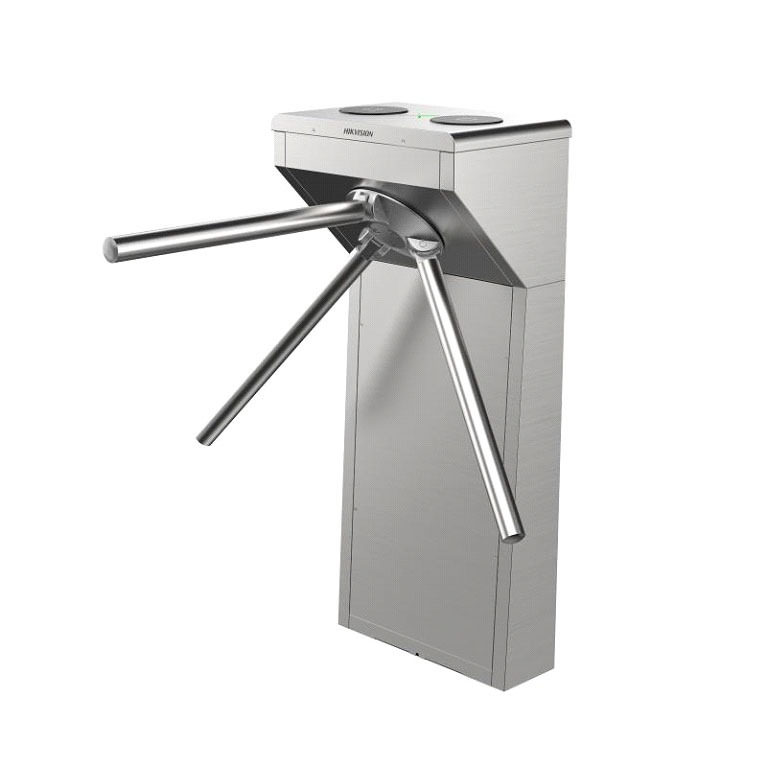
Tripod turnstiles are compact pedestrian control gates made of stainless steel with three rotating arms that control entry one person at a time. They are widely installed in metro stations, stadiums, factories, and offices where moderate security is required. These gates are durable, cost-effective, and easy to integrate with RFID or biometric systems. However, they offer a narrow passage of around 500 mm, making them unsuitable for wheelchairs or luggage, and movement can slow down during peak hours.
Common Locations : Metro stations, stadiums, factories, offices
Advantages:
- Affordable solution
- Durable structure
- Can integrate with RFID & biometric systems
- Controls both entry and exit
Limitations:
- Narrow passage (approx. 500 mm)
- Not suitable for luggage or wheelchairs
- Slower movement during peak hours
2. Full-Height Turnstile Gate
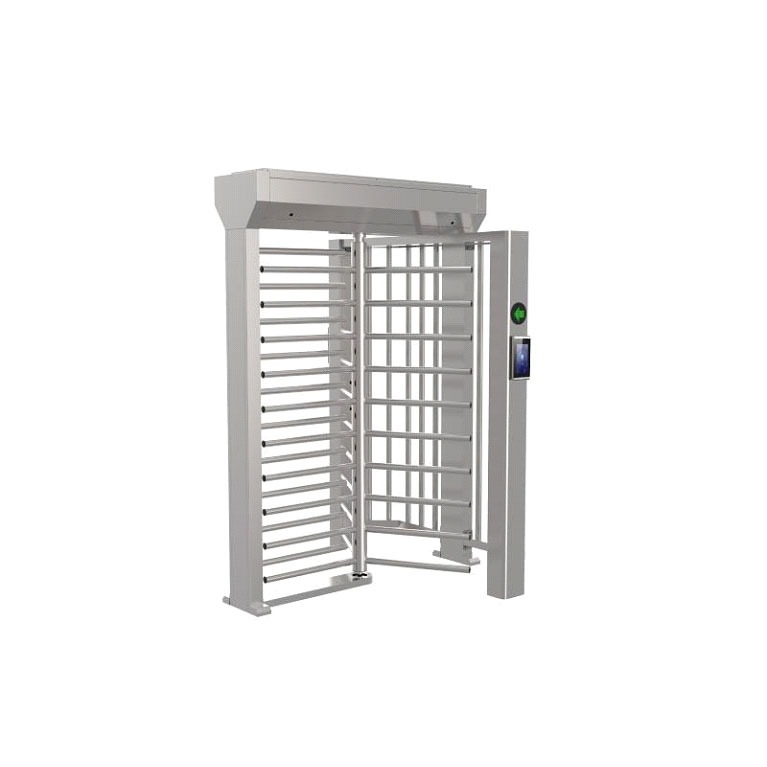
Full-height turnstiles function like a revolving security cage and provide the highest level of access control. Their tall rotating structure prevents climbing, crawling, or unauthorized entry, making them ideal for high-security areas such as industrial plants, construction sites, and restricted zones. They are highly secure and suitable for outdoor environments, though they require more installation space and allow slower pedestrian movement compared to other models.
Common Locations : Industrial plants, high-security zones, defence areas
Advantages:
- Highest security level
- Prevents tailgating
- Suitable for outdoor environments
Limitations:
- Slow pedestrian movement
- Not convenient for luggage
- Requires more installation space
3. Flap Barrier Gate
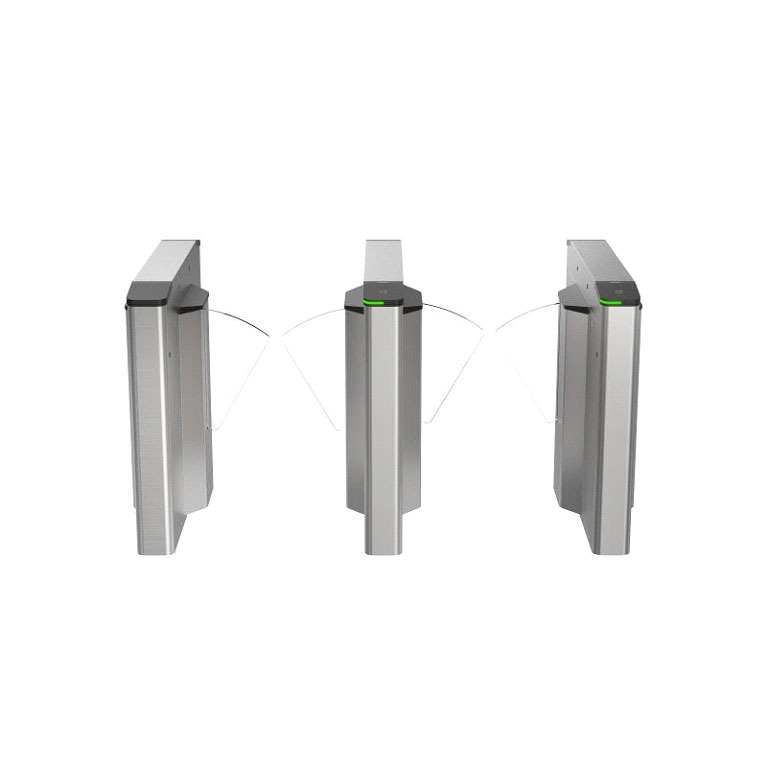
Flap barrier gates use retractable wings that open after successful authentication and close immediately after passage. These gates provide faster access compared to tripod models and offer wider passage options ranging from approximately 550 mm to 990 mm. Commonly seen in metro stations, banks, and corporate offices, they support high-speed movement while maintaining controlled access, though they require proper maintenance and are generally more expensive than basic turnstiles.
Common Locations : Banks, metros, corporate offices
Advantages:
- Faster throughput
- Wider passage (550–990 mm)
- Emergency-friendly
Limitations:
- Higher cost
- Requires maintenance
- Limited outdoor suitability
4. Swing Gate
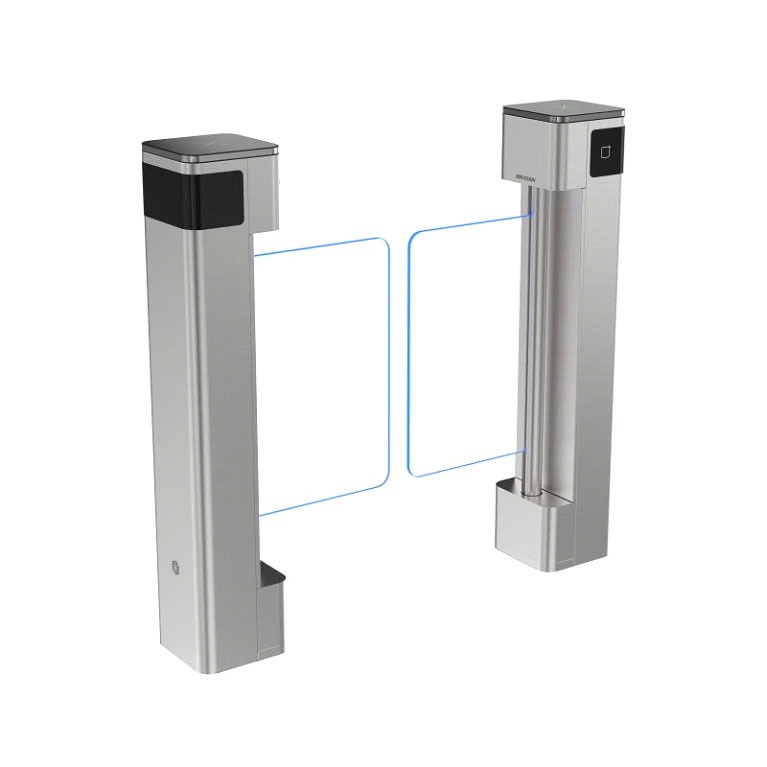
Swing gates operate like standard doors that open upon authorization and provide wider access space compared to other turnstiles. These gates are ideal for hospitals, corporate offices, accessible entrances, and areas requiring wheelchair or luggage-friendly access. They offer smooth and quiet operation with advanced traffic detection features, though they are primarily recommended for indoor installations and may involve customization costs.
Common Locations : Hospitals, offices, accessible areas
Advantages:
- Wheelchair-friendly
- Wide passage (550–1000 mm)
- Quiet operation
Limitations:
- Indoor use recommended
- Custom models can be expensive
Final Thoughts
Conclusion
Turnstile gates are essential components of modern access control infrastructure. Whether the requirement is basic crowd management or high-level biometric security, different turnstile types cater to different operational needs.
Selecting the right system depends on factors such as security level, pedestrian traffic volume, installation space, accessibility requirements, and budget planning. A well-chosen turnstile solution enhances safety, improves operational efficiency, and creates a professional entry management system for any premises.
Choosing the right turnstile depends on:
- Security level needed
- Daily footfall
- Installation space
- Budget
If you’re planning to install a turnstile system, select a model that balances security, convenience, and long-term reliability.
Other Products
Our CCTV Camers
Upgrade Your Access Control Today
Install a reliable and modern Flip Barrier System for controlled pedestrian access.